Mini Vegetable Embroidery Bundle Review
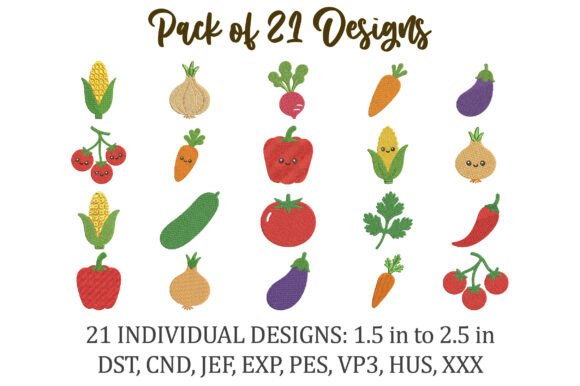
As an embroidery designer who has spent years translating digital concepts into tangible thread on fabric, I approach every new machine embroidery design with a critical eye. The market is flooded with decorative patterns that look great in a hoop but fail when applied to professional merchandise. Today, I am reviewing the Mini Vegetable Embroidery Bundle, a collection featuring carrots, tomatoes, onions, corn, eggplant, peppers, and cucumbers. My goal is not just to admire the aesthetic, but to determine if this bundle holds up as a viable asset for small business merch, branded patches, and commercial apparel decoration.
First Impressions: Farm Charm Meets Professional Utility
The initial visual impact of the Mini Vegetable Embroidery Bundle is undeniably friendly and rustic. In the world of branding, "cute" can sometimes be a liability, suggesting a lack of seriousness. However, this bundle strikes a delicate balance. The designs feel handmade yet structured enough to convey quality. For businesses operating in the Kitchen sector—such as farm-to-table cafés, artisanal bakeries, or organic grocery boutiques—this aesthetic aligns perfectly with values of freshness and authenticity.
Unlike overly complex floral arrangements that often get lost in translation during digitization, these vegetable motifs are distinct. The shapes of the carrots and peppers are bold enough to remain recognizable even at reduced scales. This clarity is essential for brand identity. When a customer glances at a tote bag or a staff apron, they need to instantly recognize the symbol associated with your shop. The playful nature of the vegetables adds a layer of approachability, which can significantly boost buyer engagement for local brands trying to stand out against corporate competitors.
Evaluating Real-World Business Applications
The true test of any digital embroidery file lies in its versatility across different products. Here is how I envision the Mini Vegetable Embroidery Bundle performing in actual production scenarios:
- Branded Patches and Labels: These designs are ideal for creating embroidered patches. A tomato or onion motif sewn onto a denim jacket or a canvas backpack serves as a subtle yet effective logo accent. For handmade product labels, a single carrot or pepper can act as a unique seal of quality, distinguishing your goods from mass-produced items.
- Staff Uniforms and Aprons: In a café or bakery setting, apron embroidery is a powerful tool for team cohesion. Placing a small cluster of these vegetables on the chest pocket or hem of a uniform creates a cohesive look without overwhelming the wearer. It signals to customers that the staff cares about fresh ingredients and local sourcing.
- Cap Embroidery: Caps are high-visibility marketing tools. The compact nature of the "mini" designs makes them perfect for the front panel of a baseball cap. A single eggplant or corn cob centered on a cap offers a clean, modern look that avoids the clutter often seen with large, detailed logos.
- Tote Bag Design and Merchandise: For eco-friendly shops, tote bag design is crucial. These vegetable icons work beautifully as repeating patterns or as standalone statement pieces. They add texture and depth to flat cotton bags, elevating the perceived value of the finished product.
- Event Merch and Gifts: Farmers markets and craft fairs thrive on unique swag. Offering customers a free patch with their purchase, featuring one of these vegetable designs, creates a memorable touchpoint that encourages repeat business.
Critical Considerations for Production
While the potential is high, there are specific areas where caution is required. As a designer, I always advise clients to test before committing to a full run. The term "Mini" in the title suggests smaller dimensions, which presents challenges regarding stitch density and detail retention.
When shrinking these designs for tiny lettering or very small patches, the outlines of the vegetables may lose definition. If the stitch count is too low, the edges can appear jagged; if it is too high, the fabric may pucker. This is particularly important on textured fabrics like heavy canvas or thick denim used for aprons and jackets. Additionally, on dark uniforms, the contrast of the thread colors becomes paramount. A light green cucumber on a black background requires precise underlay to ensure visibility and prevent the dark fabric from showing through the stitches.
Curved surfaces, such as the bill of a cap or the side of a bottle, also require careful handling. Designs that rely heavily on straight lines might distort on curves. Before finalizing a cap embroidery project, it is wise to check how the vegetable shapes adapt to the curvature of the garment. Furthermore, items that undergo frequent washing, like kitchen towels or daily-wear shirts, need robust stitching. Ensure the stabilizer used during production is appropriate for the fabric weight to prevent the design from cracking or fraying over time.
Impact on Brand Identity and Trust
In the competitive landscape of small business merch, consistency is key. The Mini Vegetable Embroidery Bundle offers a set of design assets that can be used repeatedly across various mediums to build visual consistency. Whether it is on a business card mockup, a physical embroidered patch, or a custom shirt, seeing the same stylized tomato reinforces brand recognition.
This consistency fosters trust. Customers begin to associate the specific style of these vegetables with your brand's promise of quality and care. A well-executed commercial embroidery project signals professionalism. It tells the customer that you invest in your presentation, which translates to an investment in your product quality. Conversely, a poorly stitched or pixelated design can damage credibility. Therefore, ensuring the finished product looks crisp and professional is non-negotiable.
Designer Notes: Best Practices for Implementation
To get the most out of this Embroidery bundle, I recommend following these practical steps before launching your production line:
- Test in Black and White: Always run a monochrome test first. This helps you identify issues with spacing and outline integrity without the distraction of color.
- Verify Hoop Size: Confirm that the design fits within your standard hoop size. If the bundle includes larger arrangements, ensure you have the necessary equipment to accommodate them.
- Check Thread Color Contrast: Select thread colors that pop against your chosen fabric. Avoid matching the thread too closely to the background unless aiming for a tonal, subtle effect.
- Inspect Spacing and Density: Look for areas where stitches might crowd each other, leading to puckering. Adjust the settings in your machine software if necessary.
- Use Proper Stabilizer: Never skip the stabilizer. For custom apparel like hats or stretchy fabrics, a tear-away or cut-away stabilizer is essential to maintain the shape of the vegetables.
- Create a Printable Mockup: Generate a printable mockup for client approval or internal review. Seeing the design on a realistic rendering of a tote bag or cap can reveal layout issues that are invisible on a screen.
- Compare with Other Assets: Place the vegetable designs next to your existing logo and typography. Ensure they complement rather than compete with your primary branding elements.
- Confirm Commercial Licensing: Before using any embroidery file for business, double-check the license terms. Ensure you have the right to use the Mini Vegetable Embroidery Bundle for unlimited commercial projects, including resale on platforms like Etsy.
Ultimately, the Mini Vegetable Embroidery Bundle is a versatile tool for businesses looking to infuse their brand with personality. By applying these professional standards and testing rigorously, you can transform simple vegetable icons into powerful symbols of your brand's identity.