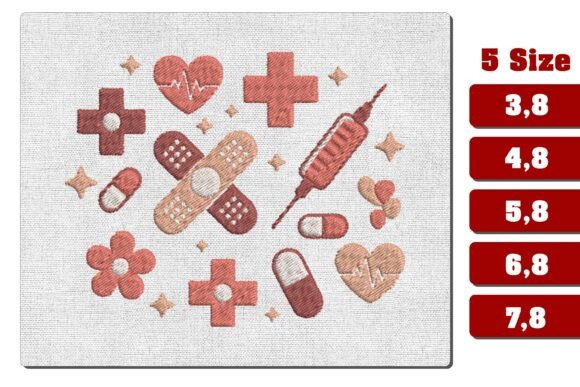
Nurse Medical Machine Embroidery Design Review
As a seasoned embroidery designer who has spent countless weekends setting up booths at craft fairs and managing online handmade shops, I know that the difference between a design that gathers dust and one that sells out often comes down to practicality and visual impact. Today, I am reviewing the Nurse Medical Machine Embroidery Design, a digital asset that promises versatility across multiple sizes. Before I commit hours of machine time and fabric costs to turning this into a craft fair product, I need to evaluate if it truly holds up under the scrutiny of real-world production and customer expectations.
First Impressions: Style and Market Appeal
When I first load the Nurse Medical Machine Embroidery Design into my digitizing software, the initial impression is one of professional utility mixed with approachable charm. It does not feel overly rustic or farmhouse-themed; instead, it leans towards a clean, modern aesthetic that appeals to healthcare professionals looking for personalized gear. For an Etsy seller or boutique maker targeting nurses, doctors, and medical students, the design strikes a balance between "cute" and "professional." It avoids being too cartoonish, which ensures it remains appropriate for workplace environments while still feeling like a thoughtful handmade product.
The fact that this machine embroidery design is available in sizes ranging from 3.8 inches to 7.8 inches is a significant advantage. In the world of commercial embroidery, size flexibility allows me to adapt a single file to various product lines without needing to purchase separate assets. This scalability is crucial for maintaining brand consistency across a booth display, whether I am selling small accessories or larger home goods.
Product Suitability and Visual Impact
One of the primary questions I ask when reviewing any embroidery file is: where will this look best? Based on the description and typical applications for medical-themed art, the Nurse Medical Machine Embroidery Design performs exceptionally well on specific items.
- Tote Bags and Market Bags: A tote bag design needs to be legible from a distance. The larger sizes (6.8 in and 7.8 in) of this design would make a bold statement on canvas totes. Nurses often carry heavy loads, and a durable, embroidered bag with a clear medical motif serves as both a functional tool and a conversation starter at the hospital or market.
- Apron Embroidery: Aprons are a staple for medical staff during breaks or community health events. Placing this design on the bib of a cotton apron adds a personal touch. The medium sizes (4.8 in to 5.8 in) fit perfectly here, ensuring the design is visible but not overwhelming.
- Tea Towel Embroidery: Kitchen linens are popular gifts. A tea towel with a subtle medical theme makes for a great housewarming gift for a new nurse. However, I must consider the texture of the towel loops. If the stitch density is too high, the towel might pucker. Testing is essential here.
- Embroidered Patches: For those who prefer to sew rather than embroider directly onto garments, creating patches is a smart strategy. These can be sold as add-ons for jackets, scrubs, or hats. The smaller sizes (3.8 in) are ideal for creating compact, high-quality patches that can be ironed or stitched on.
- Caps and Headwear: Curved surfaces like caps require careful consideration. While the design looks good digitally, the curve of a baseball cap can distort text or intricate details. I would likely reserve the 3.8 in or 4.8 in versions for caps to ensure the image remains recognizable.
Production Realities: Density, Fabric, and Stabilizers
While the digital preview looks promising, the reality of production involves navigating physical constraints. As I prepare to hoop the fabric, I am mindful of the stitch density. Medical designs often include icons like stethoscopes, hearts, or crosses, which can have tight corners. If the Nurse Medical Machine Embroidery Design has dense areas, it may require a stronger stabilizer to prevent sinking or puckering, especially on thicker fabrics like denim or heavy canvas.
Fabric texture plays a critical role in the final outcome. On smooth cottons and blends, the design should pop beautifully. However, on textured items like waffle-weave towels or fleece, tiny details might get lost in the weave. I always advise checking the smallest size (3.8 in) carefully. Sometimes, what looks crisp on a screen becomes muddy when stitched onto a coarse material. For dark fabrics, the choice of thread colors becomes even more important. A white or light-colored thread against navy blue scrubs or black totes creates high contrast, making the design stand out immediately to potential buyers browsing a table display.
Sales Strategy: From Booth Display to Online Listings
For a weekend craft fair, visibility is everything. The Nurse Medical Machine Embroidery Design offers a clear focal point that draws the eye. When displayed on a rack of finished products, such as a row of matching tote bags or a stack of embroidered pillow covers, the repetition of the design creates a cohesive brand identity. This visual strength helps a small shop product line appear professional and established.
In the digital realm, specifically for Etsy sellers, photography is key. This design photographs well because of its distinct shapes. Creating a printable mockup for listings is straightforward, allowing customers to visualize the design on different items before purchasing. Whether selling the physical item or the digital embroidery file itself, the clarity of the design reduces return rates and increases customer satisfaction. Buyers want to see exactly what they are getting, and a clean, well-defined design minimizes ambiguity.
Practical Designer Notes for Success
Before mass-producing items using the Nurse Medical Machine Embroidery Design, there are several critical steps I recommend to ensure quality control:
- Test on Scrap Fabric: Never skip the test run. Stitch the design on a scrap piece of the actual fabric you plan to use. Check for puckering, skipped stitches, or thread breakage.
- Review Hoop Size: Ensure your embroidery hoop can accommodate the largest size (7.8 in) if you intend to use it. If your machine only supports a 5x7 hoop, you will need to adjust your project planning accordingly.
- Check Thread Contrast: Experiment with different thread colors to find the most striking combination for your target audience. High contrast usually translates to better sales.
- Confirm Licensing: Always verify the commercial license terms. Since this is intended for commercial embroidery and resale, you must ensure you have the right to sell finished goods made with this embroidery file.
- Create Real Mockups: Photograph at least one finished product in natural light. Real photos build trust more effectively than digital renderings alone.
Final Verdict on Market Potential
The Nurse Medical Machine Embroidery Design is a strong contender for any maker focusing on healthcare appreciation gifts or professional apparel. Its availability in multiple sizes makes it a versatile asset for a diverse product range, from small embroidered patches to large tote bag designs. While attention must be paid to fabric texture and stitch density, the overall aesthetic is clean, professional, and appealing to a dedicated niche market.
For creative entrepreneurs and digital sellers, this design represents a low-risk, high-reward opportunity. By pairing it with high-quality materials and precise stitching techniques, you can create premium finished products that stand out in a crowded marketplace. Whether you are stocking shelves for a local fair or listing items online, this design has the potential to become a bestseller for your handmade business.