Cozy Kitchen Shelf Hand Embroidery Pattern Review
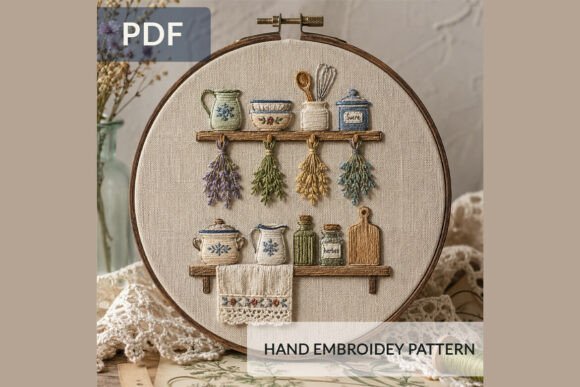
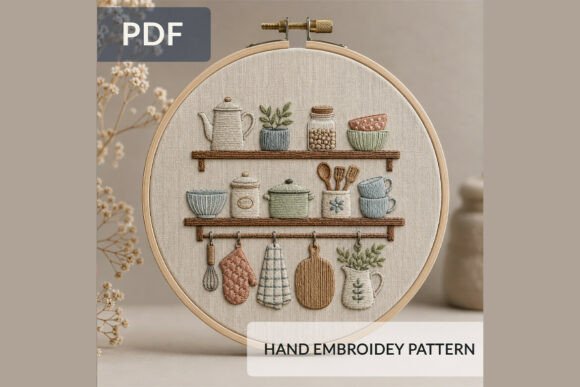
As a professional embroidery designer who has spent years translating digital concepts into tangible thread for small businesses, I approach every new digital embroidery file with a critical eye. My goal is not just to see if a design looks pretty on a screen, but to determine if it holds up under the rigors of commercial production. Today, I am reviewing the Cozy Kitchen Shelf Hand Embroidery Patte, a Graphics asset described as a charming rustic kitchen scene featuring wooden shelves and teapots. While marketed primarily as a DIY hoop art pattern, its potential for small business merch and branded applications is significant, provided we navigate its specific design characteristics correctly.
First Impressions: Rustic Charm Meets Brand Identity
The first time I opened the preview for the Cozy Kitchen Shelf Hand Embroidery Patte, the aesthetic was immediately clear. It exudes a warm, handmade, and inviting vibe. The imagery of rustic wooden shelves and classic teapots taps directly into the "cottagecore" and artisanal trends that are currently dominating the market for bakeries, boutique cafés, and florists. For a brand trying to establish a brand identity rooted in comfort, tradition, and quality, this design offers a strong visual hook. Unlike modern, geometric logos that can feel sterile, this piece feels personal and crafted.
However, as a designer evaluating this for commercial embroidery, I must ask: does it translate from a PDF hand-embroidery guide to a machine-readable format suitable for mass production? The intricate details of the teapot handles and the texture of the wood grain are beautiful in theory, but they present challenges when converting to a machine embroidery design. The charm lies in its complexity, but that same complexity can be a liability if the stitch count becomes too high or the spacing too tight for certain fabrics.
Evaluating Real-World Business Applications
When considering how the Cozy Kitchen Shelf Hand Embroidery Patte performs in real business scenarios, several use cases stand out. This design is particularly well-suited for businesses that want to elevate their packaging or staff uniforms without looking overly corporate.
- Apron Embroidery: For a local bakery or a specialty tea shop, placing this design on the chest pocket or back yoke of a chef's apron creates an instant connection with customers. It signals that the business values craftsmanship. The rustic theme aligns perfectly with the function of the garment.
- Tote Bag Design: A large-scale version of this pattern on a canvas tote bag serves as excellent mobile advertising. Because the design is illustrative rather than text-heavy, it reads well even when the bag is carried at a distance.
- Custom Apparel and Patches: Creating an embroidered patch from this artwork allows for versatility. Staff can sew these patches onto denim jackets, caps, or work shirts. It turns a standard uniform into a piece of branded merchandise that employees might actually want to wear off the clock.
- Product Packaging Accents: For a handmade soap or candle company, a smaller version of the shelf motif could serve as a label accent, adding a premium, tactile element to the unboxing experience.
Critical Considerations for Production
While the aesthetic appeal is high, there are specific areas where the Cozy Kitchen Shelf Hand Embroidery Patte requires careful handling to ensure a professional finished product. As you move from concept to production, keep these constraints in mind.
Size and Detail Limitations
The description mentions "rustic wooden shelves" and "teapots," which implies fine lines and small details. In cap embroidery or on very small patches, these details can easily get lost or turn into a muddy blob of thread. If you plan to use this on a baseball cap front, you may need to simplify the design significantly. Tiny lettering, if included in your custom branding alongside the graphic, should be avoided unless the font is thick and bold. Always test the design at your intended size before committing to a full run.
Fabric Texture and Stabilizer Needs
This design features organic shapes and likely varied stitch density to create the illusion of wood grain and ceramic. On textured fabrics like heavy wool, corduroy, or linen—common choices for rustic brands—the needle penetration can be tricky. You will need to select the appropriate stabilizer to prevent puckering. A tear-away stabilizer might not suffice for a dense area; a cut-away or wash-away option is often safer for maintaining the integrity of the image on stretchy or soft materials.
Color Contrast and Visibility
Since the design is inherently earthy, using it on dark uniforms requires strategic planning. Light-colored threads against dark fabric work well for outlines, but filling in the entire shelf scene with light thread can result in excessive thread colors and high costs. Conversely, using dark thread on a light apron might make the delicate details of the teapots disappear. Review your thread colors carefully to ensure the image pops without losing its cozy character.
Impact on Brand Perception and Customer Trust
Using a cohesive design like the Cozy Kitchen Shelf Hand Embroidery Patte across your design assets builds visual consistency. When a customer sees the same charming shelf motif on your website, your printable mockup, your staff's aprons, and your gift bags, it reinforces professionalism. It tells the customer that you pay attention to detail. In the world of handmade products, this level of care translates directly to trust. Customers are more likely to perceive your goods as higher quality when the branding feels intentional and well-executed.
Furthermore, this type of imagery fosters buyer engagement. It invites the customer into the story of your brand. A logo that says "Bakery" is functional, but a logo that shows a cozy kitchen shelf evokes a feeling. That emotional connection is what drives repeat business and social media sharing.
Practical Designer Notes for Implementation
If you are ready to integrate the Cozy Kitchen Shelf Hand Embroidery Patte into your business workflow, follow these steps to ensure success:
- Test in Black and White First: Before selecting your palette, print the design in grayscale to check the contrast and visibility of the smallest details.
- Verify Hoop Size: Confirm that the dimensions of the design fit within your standard hoop size. If the pattern is too wide, you may need to split it or resize it, which affects the final look.
- Check Commercial Licensing: Since this is a Hand Embroidery Patterns PDF, strictly review the license terms. Ensure you have the right to use it for commercial embroidery and selling finished goods. Do not assume personal use licenses cover business sales.
- Create a Mockup: Generate a printable mockup showing the design on your actual product (e.g., a photo of the apron with the design superimposed) for client approval or team alignment.
- Compare with Other Assets: Place the design next to your existing logos and other graphics to ensure it doesn't clash stylistically.
- Run a Test Stitch: Always embroider a sample on the exact fabric you intend to use. Check for pull, puckering, and color saturation.
In conclusion, the Cozy Kitchen Shelf Hand Embroidery Patte is a powerful tool for small business owners looking to infuse their brand with warmth and character. By respecting the technical limitations of embroidery and planning your application strategically, you can transform this digital file into a cornerstone of your custom apparel and merchandising strategy. Whether it ends up on a cap, a tote, or a uniform, done right, it will tell your brand's story with every stitch.